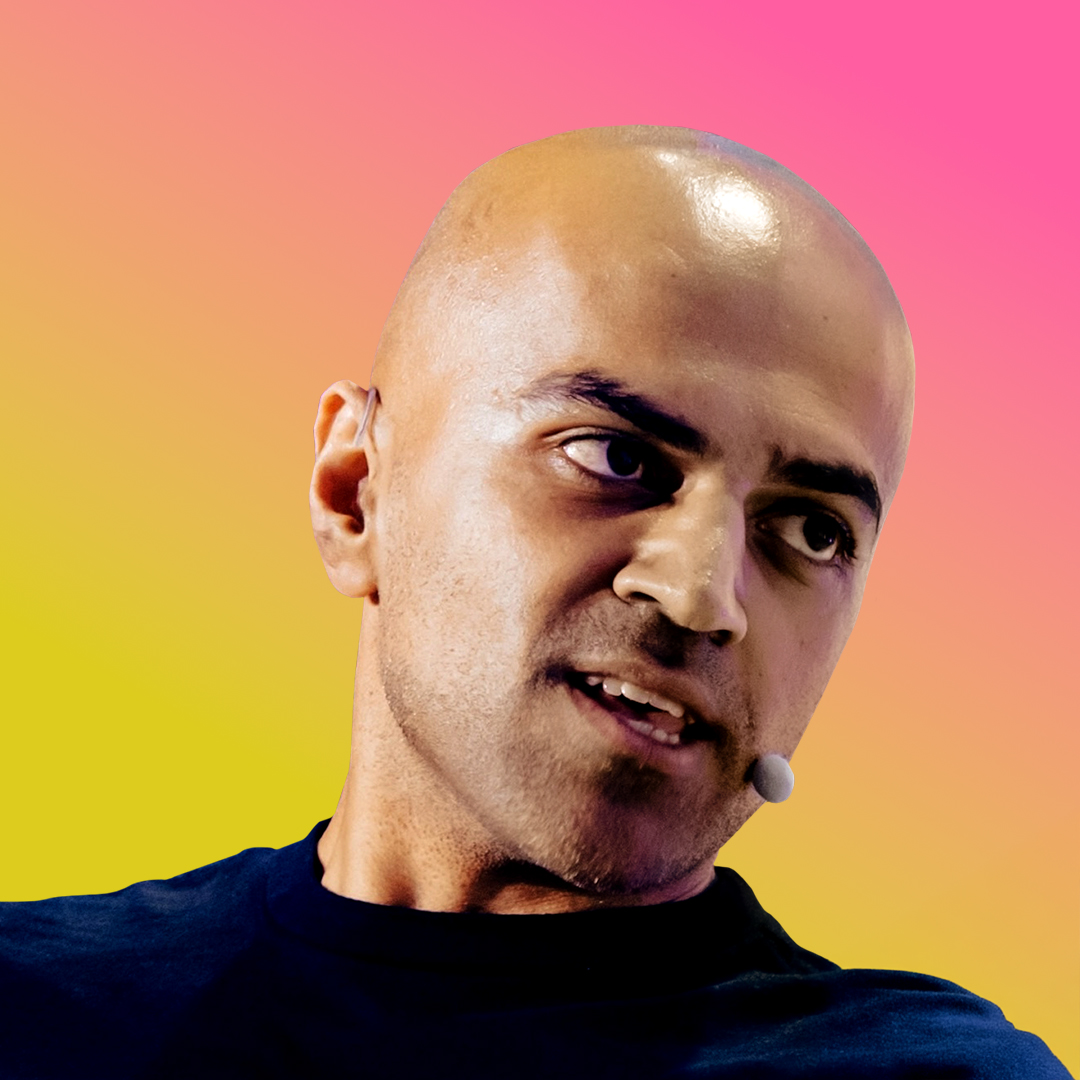
AI agents are quickly becoming economic actors, with personal assistant frameworks taking actions and transacting on behalf of people and businesses. Illia explains how NEAR AI and NEAR Intents are converging as the unified commerce layer, driving agentic commerce across all asset types and providing secure, private infrastructure for AI tools. He will share some exciting new launches and preview the NEAR roadmap for the year ahead.

How real autonomous systems are assembled, evaluated, and constrained in practice, beyond demos and single-model abstractions.


Why generalization, not raw scale, determines whether modern AI systems become usable, reliable intelligence in the real world.


What must be true before autonomous agents are trusted to control real capital, from security and custody to incentives and risk.


NEAR Intents is already powering cross-chain swaps and unified liquidity for onchain markets and tokenized assets. The Intents Widget, built by Aurora, turns that power into a simple, embeddable integration any app can use. Builders can enable funding from any chain, any token, in a single flow.

HOT Labs demonstrates how NEAR Intents enables chain-abstracted products that work seamlessly across networks. The session focuses on what is live today and how builders can replicate the approach.

We bear witness to a remarkable convergence in frontier model intelligence. In 2026, the intelligence economy will be won on environments, context, and interfaces. This talk details an agenda for unlocking economic value through increasingly general environments, frictionless context elicitation, and high-taste interfaces to the analog and digital worlds.

The biggest bottleneck in AI isn’t talent, but the centralized control of compute access and cost. Discover how decentralized networks can break the grip of cloud monopolies and unlock the next wave of innovation.

The AI era is here and clarity is everything. Join us for a high energy session where builders have three minutes to pitch their vision of the NEAR thesis. Following a Prequel Introduction to frame the ecosystem’s goals, participants will compete for a share of 2,000 NEAR. No slides or props are allowed. Only your words and your passion can win over the audience. Community voting determines the winners, so come prepared to convince the crowd.
Competition Rules:
– Time Limit: Strictly 3 minutes per pitch.
– Props: Notecards and phones only (no slides or physical props).
– Rewards: 1st Place (1,000 NEAR), 2nd Place (600 NEAR), 3rd Place (400 NEAR).


Agentic Commerce is the north star, but what are the products and infrastructure to realize this vision? NEAR AI is shipping the engine to make Agentic Commerce a reality.

How production AI systems protect sensitive data, define trust boundaries, and execute without exposing what matters.


Why provable guarantees become essential once autonomous systems act in real-world environments.


The questions enterprises ask before approving private AI systems, from security guarantees to auditability and risk.


The Innovation Sandbox was more than a hackathon. It was a high-speed pressure test for the 2026 NEAR stack. Join the Sandbox program lead for a comprehensive review of the 3-week sprint where builders moved beyond prototypes to ship mainnet-ready products.

RHEA Finance explores how intent-based infrastructure transforms DeFi from manual execution into programmable outcomes. The session covers how NEAR Intents enable seamless swaps, yield strategies, and capital flows while abstracting complexity for users. Attendees will see how intent-based execution unlocks more accessible, automated, and scalable financial primitives in live systems.

As payments evolve beyond single chains and manual execution, consumers and AI agents need a unified way to transact across assets, applications, and intent-driven workflows. This session explores how Pingpay’s orchestration layer, powered by NEAR Intents, enables anything-to-anything payments.

Why privacy succeeds when it enables adoption, verification, and real markets.

NEAR’s CTO shares the next wave of exciting upgrades to the core NEAR Protocol this year, with major advancements in execution, storage, and privacy.

One of the current limitations in many intent-based systems is the absence of native privacy at the protocol layer. The Anoma DOS introduces privacy primitives that can extend intent-based architectures across chains.

Founders at the intersection of AI and onchain systems must navigate new product, distribution, and defensibility challenges. This session shares a practical venture framework for designing AI-native workflows, using tokens to accelerate network effects, and identifying the patterns that separate enduring products from hype.

Why autonomous AI systems require a new network layer optimized for speed, bandwidth, and real-time execution.

What it actually takes to fine-tune large language models on edge and federated hardware, and the tradeoffs teams face when deploying decentralized AI in the real world.

How compute, runtimes, orchestration, and execution layers come together to support autonomous agent systems.


Live demo. Build games. Engage your community.

What happens when an agent encounters a task it cannot solve? Instead of failing, it can now create the capability it needs. This session shows how agents can dynamically generate and use new tools at runtime, enabling systems to adapt and remain useful as requirements evolve.

A deep dive into how NEAR Intents, StableFlow, and STP eliminate bridge risks to provide the most efficient, one-click venue for global stablecoin liquidity.

How intent-based systems coordinate execution, liquidity, and control as agents begin to act onchain.


NEAR Intents began with cross-chain swaps. It is evolving into a unified financial layer that abstracts complexity across chains and assets. The roadmap introduces a seamless app experience, institutional-grade privacy, programmable yield across tokens and networks, and token economics designed to align usage with long-term value creation.

How enterprises and financial platforms are adopting AI in practice, and where automation still meets hard limits.


Who controls capital in autonomous systems, and what security, compliance, and accountability require at scale.


How privacy-first infrastructure can turn AI, data, and digital sovereignty into an investable public good where systems cannot betray their users.

What must be in place for institutions to scale AI-driven commerce responsibly.


Learn how the Shade Agent Framework combines smart-contract-controlled key management with trusted execution environments to enable secure, verifiable agents in Web3.

Bermuda became a leading jurisdiction for digital finance through its Digital Asset Business Act, establishing one of the world’s first comprehensive regulatory frameworks for digital assets. This conversation explores how close collaboration between government, regulator, and industry has enabled Bermuda to move quickly while maintaining trust and global credibility. It then looks ahead to the next frontier: creating legal and regulatory clarity for autonomous AI agents to operate safely within financial services, positioning Bermuda at the forefront of the emerging agent economy.


As an OG Bitcoin DEX founded in 2021, THORSwap has evolved to become a meta-aggregator of leading cross-chain protocols. In this talk, Alan (THORSwap CEO) will cover advancements in cross-chain interoperability (NEAR Intents!) and how the new DeFi SuperApp ‘Metro’, designs user experiences that bridge the gap between complex protocols and everyday users.

Experience the future of verifiable learning with (L)Earn AI and discover how private AI ensures your journey is transparent, trusted, and under your control.

As AI systems move from experimentation into production, standards and safeguards become the foundation for trust, interoperability, and scale. This panel examines how policy, technical standards, and real-world safeguards are being shaped today and where gaps still exist between regulation, implementation, and market reality.


A technical briefing on using the SAFE-MCP security standard to implement cryptographic identity, least-privilege tool access, and non-custodial guardrails for autonomous agents.

An economic analysis of compute bottlenecks, incentive design, and the hard capital requirements for scaling open-source AI beyond mere public interest.


What biology, social systems, and AI governance teach us about building cooperation that resists exploitation at scale.

Reframing decentralized AI from a technical niche to a core business strategy for data sovereignty, cost efficiency, and long-term market autonomy.

Explore the reality of autonomous work and whether agents are ready to manage money, code, and teams without human guardrails.


Why public trust and legitimacy ultimately determine whether AI-powered commerce can scale.


A discussion on the role of open-weight models, unresolved training challenges, and what comes next for scalable, trustworthy AI.


Discover why flat fees break agentic micropayments and how x402 standardization paves the way for scalable autonomous commerce.

Ethereum’s trajectory as a settlement layer for the emerging machine economy is examined through the lens of ongoing research across AI coordination, privacy, and security. The dAI team’s work spans coordination frameworks, privacy-preserving primitives, the 8004 stack, ZK API Credits, and protocol agents. Together, these efforts explore how programmable settlement and verifiable infrastructure can support economically active AI systems at scale.

Who really shapes the future of human–machine systems once capital enters the picture.


House of Stake is NEAR’s token-based decision-making engine, designed to turn stake into stewardship. This talk explores why it exists, how it strengthens and secures the NEAR ecosystem, and how stakeholders can actively shape high-impact decisions that serve the network’s long-term interests.

Uncover the strategy for sustainable growth as NEAR Mobile evolves into a multi-ecosystem gateway using NPRO and Intents.

An open conversation with Sal Ternullo, SVRN on where the protocol is today and where it is heading next. The session covers recent updates including token mechanics, protocol direction, and governance proposals, alongside a candid discussion of priorities and open questions for the year ahead.

How humans and AI systems collaborate in real workflows today, and where human judgment remains essential.


Illia Polosukhin and Erik Voorhees join Steven Levy of WIRED for a conversation on why privacy is becoming foundational to the next generation of intelligent systems. As AI moves from experimentation into capital markets, commerce, and critical infrastructure, the ability to execute without exposing sensitive data becomes a structural requirement rather than a feature. Together, they examine how private AI reshapes sovereignty, market design, and the balance between openness and control in the emerging AI economy.